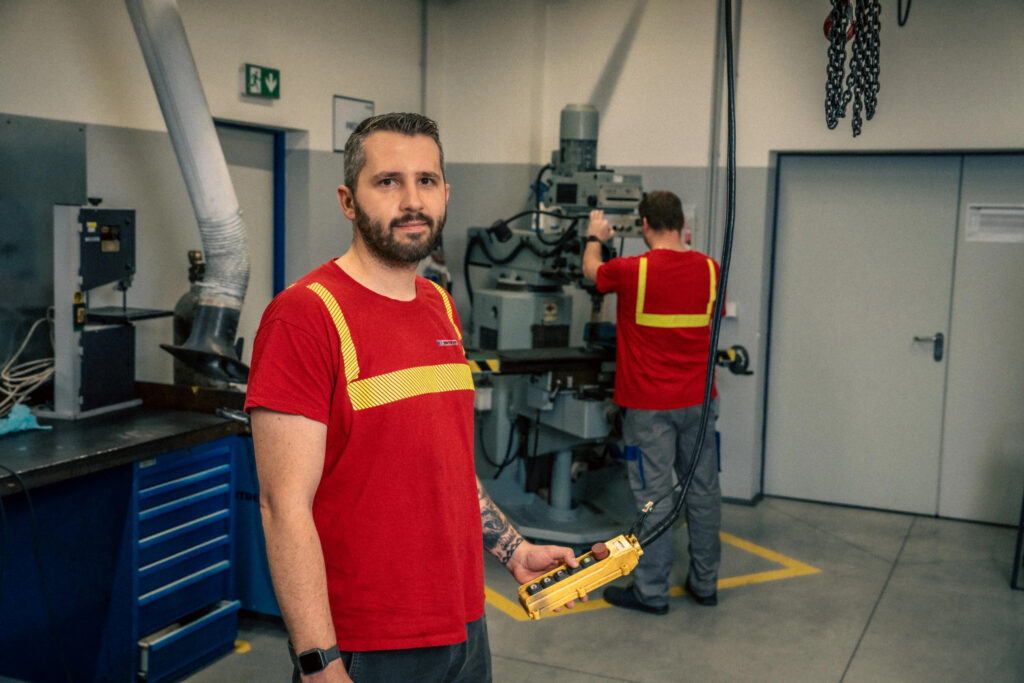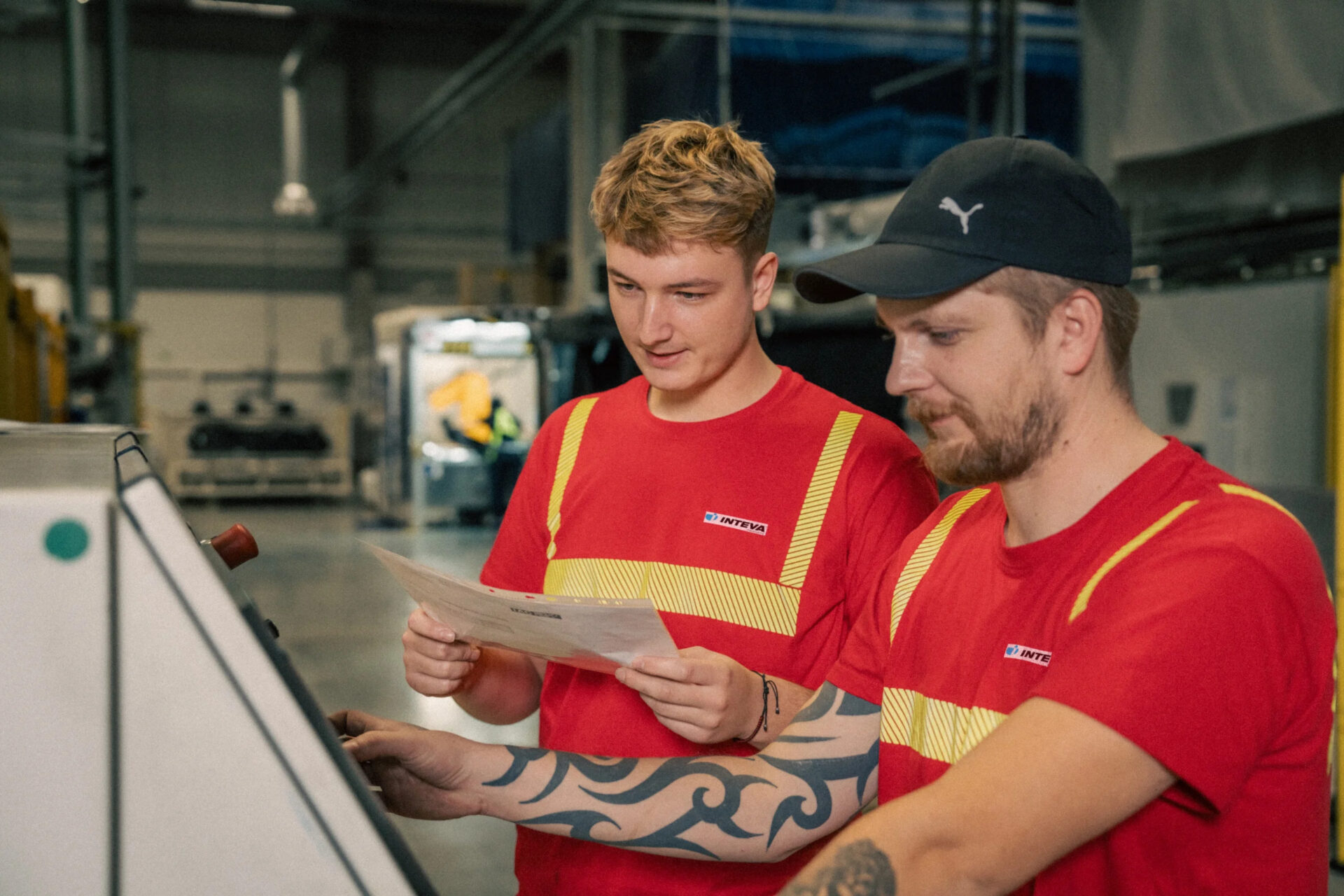
The manufacturing plant is located in the village of Hrušky in the south of the Czech Republic. It focuses primarily on the production of interior parts for leading car manufacturers.
What led INTEVA to implement a new maintenance information system?
- Outdated software solution with no potential for further development, lacking both flexibility and technical support.
- Shortage of analytical tools for decision-making; complications in planning, evaluation, and strategic decision-making.
- Manual processes and a heavy administrative burden.
- Inability to work directly at the machine – lack of mobility.
How did the implementation unfold?
The concept of digitizing maintenance emerged during 2023. By early 2024, initial analytical meetings were held, providing a detailed overview of the needs across various departments—including maintenance, process engineering, production, management, and the engineering department. The engineering team, in particular, introduced requirements for documenting process records, tests, and inspections, which expanded the scope of the proposed solution well beyond traditional maintenance. Based on these inputs, a design began to take shape for a comprehensive information system capable of covering all key processes—from breakdown resolution and the management of assets, molds, and tools, to inventory control and process data.
During the meetings, current processes were described in detail, pain points were identified, and the needs of future users were defined. At the same time, the capabilities of the Octave Attune EAM platform (formerly Hexagon EAM) and the iWi mobile application were presented, which served as the basis for developing a detailed implementation plan.
The analysis resulted in a comprehensive solution concept that integrates all areas of maintenance and technical production support. Within the scope of asset management, a structure for equipment, hierarchies, and classifications was established. This was followed by the modeling of operational maintenance—covering the processes for reporting breakdowns, creating work orders, and processing them. The next step involved defining preventive maintenance, including requirements for specialized technical equipment (VTZ) and recurring service cycles. The concept was further extended to include a module for molds, covering their replacement, modification, repair, and relocation. The final component of this phase was the definition of process records, tests, and inspections, which were integrated into the overall information flow. Once the foundational data structure was implemented, the system was expanded to include warehouse management, as well as the tracking of items, storage locations, and inventory containers.
Close collaboration between the two teams resulted in a functional system prototype, which was tested against real-world operational scenarios—including troubleshooting, tool changes, mold handling, the scheduling of preventive maintenance, and process testing. Every piece of feedback was incorporated with the goal of building a system that would operate as efficiently as possible in practice.
Once testing was complete, the system was gradually deployed into the production environment. Machinery and equipment were labeled with QR codes, and the initial dashboards, reports, and notification delivery systems were tested. Employees received on-site training to ensure they became proficient in using both the system and the mobile application. Following the launch, a phase of fine-tuning features, incorporating user requirements, and optimizing processes took place.
The resulting system has delivered a unified, centralized, and fully digitized environment for managing maintenance and operational activities. All data is recorded electronically directly at the machine, eliminating paper-based documentation, reducing response times, and improving data accuracy. The system provides instant reports, clear dashboards, and a comprehensive overview of maintenance performance. A mobile application enables technicians to work directly at the machine, report breakdowns, log completed work, and attach photographs.
The solution also encompasses warehouse management, including the issuance of items, inventory oversight, and improved control over material movements. The entire ecosystem is designed for future expansion and adapts to the evolving needs of production, maintenance, and engineering. The IWI system and its mobile application have become an integral part of the technicians’ daily work, providing a modern foundation for the continued advancement of digital transformation.
What are the main benefits of implementing a maintenance information system at INTEVA Hrušky?
Paperless and efficient operations – A mobile application allows technicians to record all tasks directly at the machine, in real time. This has eliminated the need for paper notebooks and manual data transcription, while also removing the risk of losing information. The digital environment has provided greater clarity, improved process visualization, and simplified daily maintenance work.
Accelerated information flow – All data is immediately available to both management and maintenance staff, enabling them to respond promptly and make quick decisions. Digitized procedures have eliminated manual errors, reduced wait times, and accelerated the entire process of resolving malfunctions.
A transparent and verifiable maintenance process – Every intervention is recorded in real time. Managers have a clear overview of the maintenance staff’s locations, their current tasks, and the status of individual work orders. The need for time-consuming information retrieval or physical inspections of machinery has been eliminated, thereby increasing the efficiency of the entire process.
Faster flow of information between the requester and the maintenance team – Communication between production staff and maintenance is significantly more agile. Requests enter the system immediately, and feedback regarding the status of the resolution is provided just as quickly.
Effective Process Management – Digitalization has enabled better planning, monitoring, and evaluation of maintenance processes. Each step has an assigned owner, a deadline, and clear interdependencies, which improves the coordination and manageability of the entire department.
Instant access to statistics and costs – The system offers clear reports and dashboards that allow for the rapid analysis of costs, maintenance performance, machine failure rates, and the trends of key indicators. Management thus gains a reliable basis for strategic decision-making.
A modern system ready for future development – The enterprise has positioned itself among modern manufacturing companies that actively leverage digital technologies for maintenance management and process optimization. The system is scalable and open, ready to incorporate new modules, automation, and integrations in line with future needs.